Posts mit dem Label Wootz werden angezeigt. Alle Posts anzeigen

Donnerstag, 13. September 2018

New sheath for a knife I made earlier this year


It has been a while coming, and it drove me mad somehow. That knife was sitting on the bench and I just could not make up my mind how to complete it. That handle is made of a special reindeer antler from a very special place. The blade is, compared to other knives I have made, not so special. I took a Roselli Wootz UHC blade with a claimed carbon content of 1,8% or so and a claimed Rockwell hardness of 64-66 HRC (which is a more realistic and absolutely great 62HRC in fact). It´s an industrial made blade that comes in relatively cheap. You do not get Wootz blades for 70 €, period. It has a  short tang (about 85mm long), that, when processed in the right way ist way strong enough. I polished the blade a bit and etched it as I do with my damascus blades, and a beautiful pattern showed. To you owners of Roselli knives and blades, this might be a hack you might want to try... for that knife is way better than it looks. I am not one for lookers alone, but hey, no harm done, innit? :-)

When you put a blade with a short tang into a handle, I found several things to be crucial and always try to act accordingly. First you have to keep in mind what makes a short-tang knife fail in hard use. The tang is a kind of lever. If you e.g. baton the knife through hard knotted wood, you put a great force onto the other side of that lever. To prolong the crucuial end of this lever, you have several options. First, there should be a coherent flow of force vectors. This can be achieved by choosing a material that is dense and non-porous. For instance, if you want a stag antler handle, you wat to be very sure that there is little to no marrow in the middle to give that lever (the tang) a firm base to "move" against. If the material at hand is porous, you have to drill that away, fill the "tube" you have made that way with a strong epoxy (look on the package) or liquid metal, let it dry, and drill the hole for the tang with as little tolerances as possible. You might even want to add some reinforcements, such as glass strands or even carbonfibre or metal strands into the hole along the direction of stress. Another method would be to add a bolster cup made from copper or bronze (you can get those from your local plumber´s shop). You could also make a mock full tang out of aluminium or steel and fit the short tang into that, rivet it into the aluminium tang and fit scales to that mock tang. Or you could just use a decent material in the first... :-), that said, this piece of reindeer antler had no marrow whatsoever, and I carefully filed out the tang hole to fit the tang really closely. In fact, since the antler tends always to compress a little, I filed it out somewhat smaller than needed and then softened the antler a bit internally by rinsing with a bit of water, then tapping on the butt of the handle with light blows of a peen hammer. Then I let the handle dry out completely separately from the blade and glued it on with a strong dual component glue. The bolster I made from bronze sheet.

Of course you have to keep in mind that a knife can be but a very poor excuse for a prybar and might snap in abuse. I am pretty confident with my one-of-a-kind-knives, which I can test very thoroughly, but industrial making is a whole different matter.

That said, the knife lay on the bench, and I tested it from time to time and found it a real good cutter and a nice carry. The blade, measuring in at a really agreeable and dexterous length of 85 mm bites like your little sister and keeps an edge exrtraordinarily well, and I really love it, of course. Now the knife should be used in reenactment and bushcraft, and be suitable for a variety of time epoch enactments, so choosing a motif for a carving is not at all easy, and so until now it has none. Maybe I get off my rocker and simply carve a knotwork into it or some zoomorphic ornament, who knows... I will also fit in a piece of agate or amber into the butt end, just because I like the idea.

Now those were the contemplations I subjected to, and one of the reasons it was sitting there idly.

The sheath should also be a versatile design, and I have taken to wear really loose clothing in the woods with no belt, for better flexibility and the ability to do some movements not many people do. So it needed a solution to keep it on my sorry bum without moving about too much. That was the simple part... just a leather thong did the job exceedingly well, and the knife is still light enough to be worn around the neck.

The leather I used also was a novelty for me. Normally I use uncoloured veg tan leather. This one I got cheap from a good and very old friend and fellow writer and medieval craftsman reenactor, Christian from www.dragal.de. It is absolutely top-quality. I was not quite sure whether it would take a decent snap when hardening it, but, soaking it in a solution of soda and spirit, took a really enjoyable hardness to it. Hot - waxing it with a mixture of fir resin, beeswax, birch tar, linseed oil and spirit finished it off so that the "snap" actually is just a tiny bit softer than that of a Kydex sheath. So, job done... ;-)  

It has quickly become one of my favourite knives for the woods. There are better knives for batoning, but I can take one extra for that task in my backpack. Where it excels, however, are precise cutting jobs. Processing food, snacking, whittling, harvesting plants and mushrooms, you name it. It does not weigh me down and does most of the jobs I need a knife for very well.

That blade is a really good performer for the woods. I am not so pleased with Roselli´s marketing policy, though. I strongly suppose that the advertised hardness refers to the hardness before tempering, and I fail to see the point why one would want to claim an absurd hardness in marketing. For 66 HRC would be extremely hard to sharpen in the field. To make that comparable: A good file comes at that hardness, and with 67HRC you can scratch glass. 62 HRC, however, is not only more than adequate, it is even more than ayone could wish for. So, there would be no issue at all, if  Roselli simply told the truth. This is a most excellent material, period, and needs no boasting up.

If you look for a blade, buy it, though.

Mittwoch, 14. Juni 2017

WIP - collaboration through the times

 There´s a lot of stuff going on these days, and I find little time to forge or make anything for myself... but still I fit in whatever I can, when I can. This is the knife from the last post. I reworked the carving a tiny bit and tried out something new.
The carving has been stained in a coffee/tea/onion peels concoction and dyed in dragonblood varnish. the white area had been coated in beeswax beforehand and was polished afterwards. So far I am content with the outcome, even if there´s still alot of polishing to be done. I´ll keep you posted! ;-) I threaten! ;-)

Mittwoch, 8. März 2017

New sheath for my bushcraft knife-and thoughts on Tribal knifemaking

 
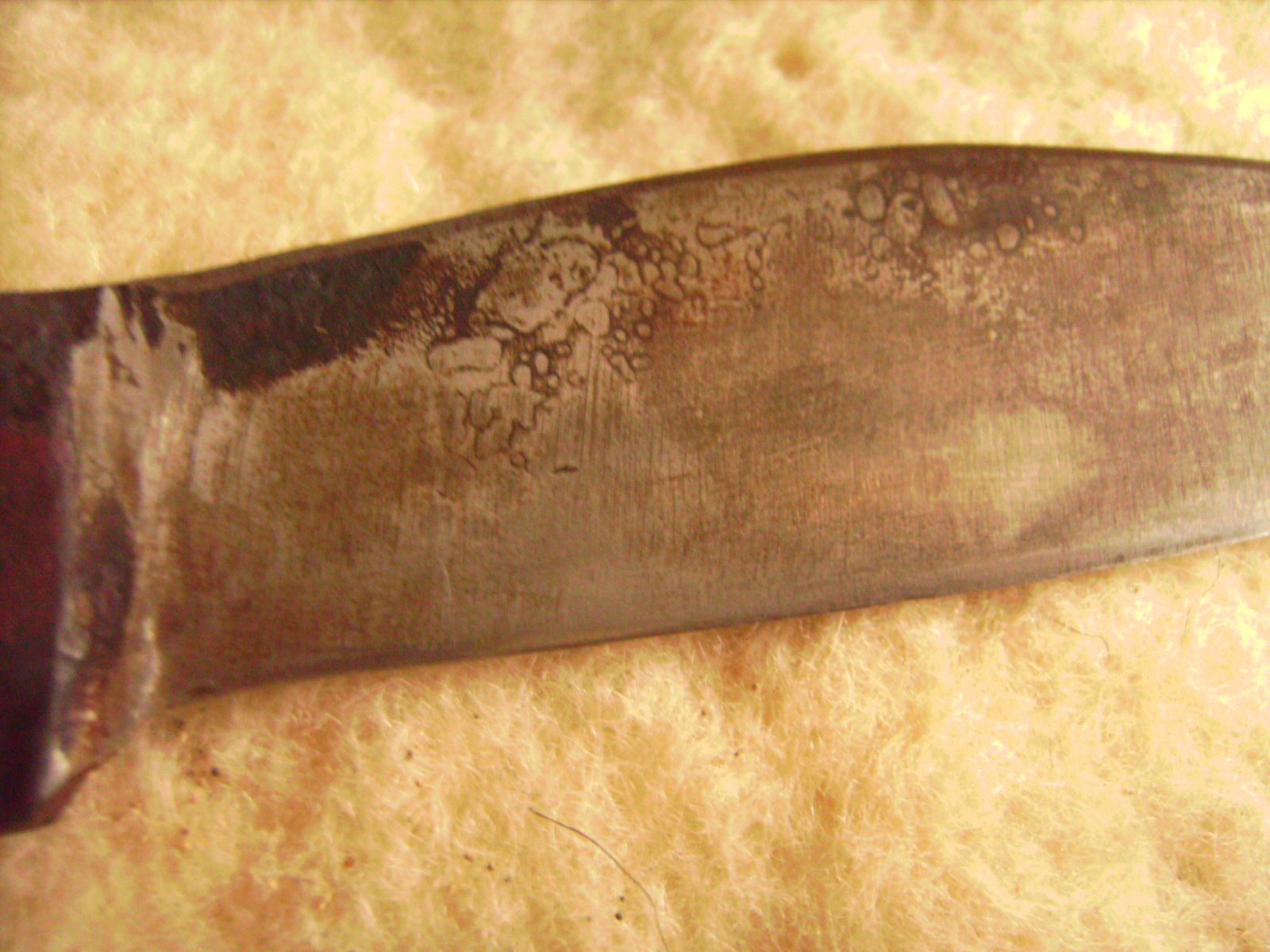
So it has been a while coming, and I went for it rather carefully... I had found an old chisel in the woods, which eventually became that bushcraft knife. In the process I had learned it was apparently crucible steel, to be precise, which shows a "Wootz" pattern. To be quite honest, I am not quite sure what to make of that "Wootz" pattern. Petr had looked at some variants of that steel and just said it was due to "uneven carbon distribution". Now that´s a bit of a redundancy, because the dendrite structures in Wootz that are responsible for the pattern also could be called that name.
 
 
Now, it is my personal knife, and I don´t want to sell it. It´s hair-splitting sharp and keeps an edge very well. The shape makes it rather dexterous, and the pattern looks cool to me, so there really is no need to tell.
 
 
Nonetheless, I love this kind of knifemaking a lot. The steel is somewhat "arcane" to me, and the resulting knife more than just a piece of steel with an edge on it. There is an adventure involved in making these things. Chance is, you get crap when you hunt for crap, but sometimes, and more often than not, you can find some right treasures if you look carefully. It is like a hunt.


Now I thought a lot about the sheath, doing some dangler rings and mountings and fittings and putting in a firesteel. But fact is, I have made sheaths like that, and I realized only but recently that there is one real bummer: I just tend not to wear them. So I made a simple sheath that can be worn quite discretely, feels comfy and does not feel like a bag of screws hanging from your belt ;-).

The sheath is quenched in a soda solution in spirit, wet-formed and hot-waxed and treated with violin veneer and then cold-waxed and oil-polished. It feels nearly as firm as Kydex and has a right snap to it. It was somewhat of an experiment, but it worked out fine.

I am still thinking about adding some carving to the handle´s end, or fitting in some silver intarsia, but I am not really sure if it would not foul up a design that´s good as is. But I am still thinking about it. Maybe a little later....;-)

In any case I will keep you posted!

Mittwoch, 1. März 2017

Thoughts on a knife-German Jagdnicker

 This is part of my not exactly tiny collection of German hunting knives, representatives of a very distinct and ancient style of knife. You can find knives with a very similar outline and concept as early as from the Roman empire, and throughout the medieval ages. It presumeably developed from both utility knives from the medieval ages as well as the "Lange Messer" / "Grosse Messer" and the "Bauernwehr". For the most part, a "Jadnicker" is seen as genuine, if it has the following properties:
-OAL 15-25cm
-Integral bolster, the "Kropf"
-usually single-edged with a somewhat triangular blade shape. Newer versions sometimes also have recurved cutting edges or a more En-nep or Kopis edge line.
-Handle material often is stag antler, although there are also cow, buffalo or ram´s horn, bone and wood around.
-The integral bolster for the most part has a fuller running rectangularily over the fingerpiece to the edge line and incisions or fileworks on the part towards the handle
-The tang can be either a short rat-tail tang or a full tang. Both are historical. If the tang is a rat-tail tang, there is an often richly decorated ferrule from either nickel silver, silver, and sometimes bronze or pewter. Newer versions are often cast, only but recently there are some reconstructions using sheet-metal techniques.

The term "Jagdnicker" refers to a hunting technique, when the knife is used to stab an animal into the neck to sever the nerves running from the brain through the spine, to kill it immediately. The vertebra directly under the skull base in German hunting jargon is called a "Nicker" (from the word nicken-to nod), the process is called "abnicken". The prefix "ab-" refers to a terminating action in this case.
This technique was always employed to ease an animal´s pain and in hunting folklore accompagnied by the word "Halali", which derives from Arabic "Halál": lawful, permissive. See also the term "helal" as anattribute for food. In hunting folklore in Germany, this was connotated into "May he rest in peace", and, psychologically speaking served as a legitimation for the killing of the prey. But this was far more than barely a lame excuse. There seems always to have been a more esoteric kind of folklore surviving in German hunting culture where the hunter was identified with the prey (Miracle and vision of St. Hubertus, St. Eustachius etc., Cernunnos-mythology), and so the call "Halali" also had to do with the wish to legitimate the own death in the death of the prey.

The Jagdnicker was widely in use since the medieaval ages. In early modern times there was the custom of an apotropaic use (use as a talisman against evil spirits). A most excellent essay in German you can find on the site of Peter Pfaffinger: http://www.fuhrmannsmesser.de/html/drudenmesser.html, who also does some of the best modern interpretations. The use of knives and metal objects as "apotropaion" is presumeably as old as metalworking an known throughout every human culture.

Also this style of knife was an integral part of the "Fuhrmannsbesteck", a set of cutlery, including a knife of triangular shape, a fork (up to two forks, to be precise) and a strop that could double as an awl. As such, it was (and is even now) carried in a separate pouch on the leg of the "Lederhosen" (leather pants) in traditional Bavarian attire. The custom of carrying two forks, one smaller one was, by the way, to provide one´s female accompany with an additional fork to partake in a feast, and called "Dirnd´l - Gabel" (Girl´s fork).

The Jagdnicker so has a very broad cultural background. What connects all of the aspects is a sort of ritualistic use. On many "Fuhrmannsbesteck" knives there are inscriptions found such as the Lord´s prayer, with an emphasis on the line "give us this day our daily bread", but also the AGLA - sigil: http://symboldictionary.net/?p=1135, the SATOR-square, INRI or IHS (Iesus Hominem salvator). Here (http://fimbulmyrk.blogspot.de/2014/02/jagd-und-hund-expo-2014-meeting-with.html) I have already written something about an encounter with Peter and some of the symbolic meanings of this style of knife.

Now keeping in mind the hunter´s call "Halali" and its Arabian roots I want to point out as a byline that there is a stunning similarity between the Persian Kard and the German Jagdnicker. See this (http://www.ashokaarts.com/img/product_images/image/detail/ewkardsheath1-45.jpg) as an example. You might also want to visit www.pinterest.com/Fimbulmyrk _ Russian and Persian knife and sword culture, for a load more examples. Now there seems to be a custom in the Achaemenid culture of Iran in the context of the paradise gardens (look here: https://en.wikipedia.org/wiki/Paradise_garden), where hunts were staged. It is therefore relatively safe to state that medieval courts in Europe were influenced by these concepts in their staged hunts, since the oriental influence on high medieval culture in Europe was being very strong. Of course that does not necessarily mean that the Jagdnicker was directly derived from the Persian Kard, and also a similarity by functionality might be possible, but it is highly probable. In a most interesting thread on bladesmith´s forum there is a "Bauernwehr" :
https://www.bladesmithsforum.com/index.php?/topic/21619-bauernwehr/, see the more utilitarian version that also shares the cylindrical tip of Persian Kards.

It is kind of a juicy aspect of all this that some hunters who are very traditional also tend to the right wing of the political spectrum and deny e.g. Syrian immigrants any kind of culture, while the very tradition they so much adore might be derived from a very ancient aspect of Syrian /Iranian/Persian culture, and more so, the tradition they uphold has its very roots in Islamic belief. Now do not get me wrong: I am not saying we all should convert to Islam (if we don´t mean it). But what I am decisively saying is that we have to admit that this world IS F***ING ROUND. Without so - called "foreign influences" any culture will die or be corrupted by incestual processes. And I am decisively saying that we should concentrate on what we have in common in order to sort out the things we must differ on. That does not mean we should adapt to any silly things that do not make sense to us. But we have to get in contact and decide without bias.

Things like these knives help me in the process. 

  
Another juicy thing: The décor on the blade of this knife is called "arabesque" for a reason... ;-)
The etching on the Hartkopf Jagdnicker depicts a stag, black-on-black.
This is a rare Hubertus piece with art nouveau ferrule and cap...


Below you can see one of my own works. Made from Wootz I found in the woods, 95x6mm blade, heat-coloured stag antler, selective temper, high, almost flat convex bevel to zero.
An early (2004) replica of a knife found in the Tyrolean Paseirer valley, originating from 1765. Forged from an old chisel with a full bainite temper.

Below there is the knife of my laid father. Hubertus full tang (tapered), 90x4mm, 1.4109 steel, full temper. He used it for just about everything from snacking to cutting drywall, from whittling to harvesting mushrooms for 30 years and loved it almost to death. When he was already sick, he tried to regrind it and completely messed it up and it was one of his joys when I managed to save it, so much in fact, that he gave it to me.  


This is another treasured knife, and one I found on a flea market in Wuppertal. It is a pre-WWI Solingen Jagdnicker (according to the style of stamping). The handle was rotten through and the tang corroded, so I epoxied a brass tube to it and, using the original ferrule, fitted a new stag handle. It is made from crucible steel (which showed a pattern), has a convex bevel to zero and is "nagelgehend", meaning the edge is ground as thin that it can be elastically deformed when drawn along a metal edge, such as a nail or steel finger ring.


This post can be by its very nature just be a teaser. The topic is vast and incorporates more knife types and regional variants, of course, and I plan to do some more work on it. As a conclusion, I want to say that I obviously love this style of knife. Obviously this is, because I grew up with it, but also for practical and cultural reasons. The knife has a lot of lessons to teach and questions to answer, while it also asks a lot more questions. It is a challenge and a treasure at the same time. And it is an important part of German culture.

This is something I want to emphasize. German culture and tradition is something that is held up either by right wing assholes or put down by superficial left wing madmen. But, if you stick to the mere facts (something that cannot be overrated in times of our everyday factocalypse), it has a lot of things to offer. German culture is rich, and it is rewarding to hold it up and live some of its traditions in a modern way. It has absorbed a lot of cultural influences and integrated them into its own context.

What makes me proud to be a German, if that phrase be allowed, stands out in stark contrast to what those right - wing hate preachers state. To me, German culture is that rich, because it was always open for new things while remaining true to itself.

I am proud that Germany welcomes refugees. That does not mean I am blind towards the fact that it is a difficult situation. There are a lot of fears involved, but the difficulties of the situation are not to be solved by hatemongering. If there is a large enough group of people, there is an ever growing chance that you will find an increasing number of assholes among them. If anyone I had welcomed as a guest in my home does not behave according to manners generally consented upon, the least thing I would do is give him a kicking outta my flat. If anyone acts as an asshole towards me, I will return the same coin. Of course. Anyone would do. But the culprit is: If your personality is strong enough, you can cope with foreign influences and take what they have to offer as your own, while dismissing what you do not want. So, say, you welcome a Syrian in your home, and you took turns cooking, you´d be in for some tasty adventures (I did, and I was), as would be the other way round. You don´t have to wear Syrian clothes or eat Mazza the whole time. But the fact is, interaction and the resulting cultural dynamics is never wrong. You just need firm ground on which to operate. Namely a strong cultural identity, and, yap, another problem, a solid material background. But without a true cultural identity, no solid material background would be possible.  

Enter the Jagdnicker. There are books on Puukos, Kards, Bowie knives, Khukuris, Ulus and whatnot. The only book on German knife culture I could find was a booklet, more of a brochure of some 35 pages and argueably written with a bit of political bias. People simply do not know. And yet I have the opinion that there is a lesson waiting to be learned. And if you do not know yourself, how can you possibly develop strength in your personality? A strong personality is capable of coping with arguments in a non-violent way. A strong personality is able to discuss criticism. But where is a strong and healthy personality in the German psyche? What would we lose, if we accepted our hunting traditions were originally influenced by Persian customs? A book written on German knives would gain quite a lot of pages and become a more interesting read if one would dare to analyse the roots in that.

There are a lot more questions to be asked, of course, and I am not saying I provide answers. But in my opinion, here´s a thread with which to begin. So this will not be the last post on German knife culture.  

Mittwoch, 22. Februar 2017

On the bench and no philosophy-promise;-)!

These are my current projects for a change. Above there´s a knife project I really like these days. I have done  a lot of research on German knife culture recently. I like studying different bladesmithing cultures but found I knew too little about our own traditions. Plus, I like the German hunting knife, the so - called "Jagdnicker" as an all round companion for the woods- simply out of practical reasons. It has been a design that has been around for centuries and used for bushcraft and hunting chores as long as it has evolved. I plan on writing something about this style of knife soon. In the meantime you can have a look at my pinterest pinboard : German knife culture, where I put together everything I found concerning the topic.

Anyway, the Jagdnicker is made from an old lathe chisel I found in the woods, presumeably HSS or refined steel. Handle will be Sambar stag. The blade is 95mm long, and 6mm at the base with a convex bevel and a selective temper.  
Below is the bushcraft knife that has been around for quite a while. Wootz with elk antler scales fitted with mosaic pins. The quench line shows quite nicely. The blade is 115 mmx5mm and has a balance point on the index finger.
I also made some file work for the tang... I like it and it´s now waiting for a sheath.
More details on the Jagdnicker design.
As is, I look forward to those two knives, and I will keep you posted!

Donnerstag, 2. Februar 2017

Patterns of life and death beneath the steel


I am wondering a lot these days. I wonder about patterns, about spirals (https://en.wikipedia.org/wiki/Golden_spiral)

 and screws

(https://www.princeton.edu/~maelabs/mae324/04/04mae_17.htm)  

and dendrites. I wonder about life and about death. Yes, I have a reason, but there is no reason involved, or better, more than reason it is that is involved.
 There are these curling, swirling patterns in the steel... steel I found in the woods.

Of course you can explain this metallurgically sound: These are deviations in the carbon content or - distribution. In the forging process you break up the dendrites of, say Wootz steel or crucible steel... and only then, when you submit it to fire and work, will these patterns show. Steel is not a gentle material. It is cold as death, and even more so when you look at these dendrite structures or the swirling patterns in the steel of the blade.

For some reason I have always emotionally connected dendrites and crystals with death.

There is this association of winter with death, and winter is full of flakes, of scales of ice and snow. Maybe it is because of this. But dendrites are not only found in crystals, but also elsewhere.

Some people mock at me because I am that fond of spirals. And spirals are everywhere and have become a symbol of blossoming and prosperity, of fertility and renewal with mankind. And yet, when you look at the way dendrites grow in screw dislocations, they are there, also.


And if you look at the famed Mandelbrot simulation, which is a diagram of the formula z->z²+c and is an evaluation of imaginary and concrete numbers, there you have it, too:


And what do you have there, when you look at it from a mythogrammatical or poetologic point of view, is something very weird. Reality, well, is just reality, but what is imaginary? The word derives from Latin "imago" and stands for a picture. And yet "Imago mundi" is more than just a picture of the world, as the name might imply. It is more of a view. What, then, you ask, is a view?

And then there is the different between the semantic properties of  "image" versus "picture" or depiction. The image of a person is that which is made of a summary of his real and imagined properties and the way he or she portrays him or herself in public. Sometimes it is just wishful thinking. Now, wishful thinking can be seen as negative quite easily. But sometimes you need imagination to change yourself. Say, you are a bit huge around the hips. You have to envision yourself with a sixpack (and I am not talking  Coronas here ;-)), or even a tiny bit leaner, to even start losing fat. Then you can achieve a goal in the first. So the imago, as I want to call it from now on, starts becoming reality. Just for theory modelling I want to define the imago as the properties not given concretely in reality a priori, but by will or another impetus becoming a "goal" and therefore standing a chance of becoming real. This is a constant process.

I constantly ponder the question: How does the fern know how to grow? And why is the world made from patterns of spirals, dendrites, honeycombs, flakes and structures that have an immanent logic and are capable of being reproduced mathematically? Yeah, there are a lot of short and long answers to it, from "all is Gods creation" to "everything can be explained", but that´s not the culprit.  

The "other world", the "yonder", "heaven" (or hell, if you so will), in that theoretical context, seems to be much, much more than is portrayed in all the mythologies of the world. More so, it can be mathematically and physically explained, even if the complex and real numbers and consequentially the Mandelbrot set are just one aspect of this relationship of "mind and matter";-).


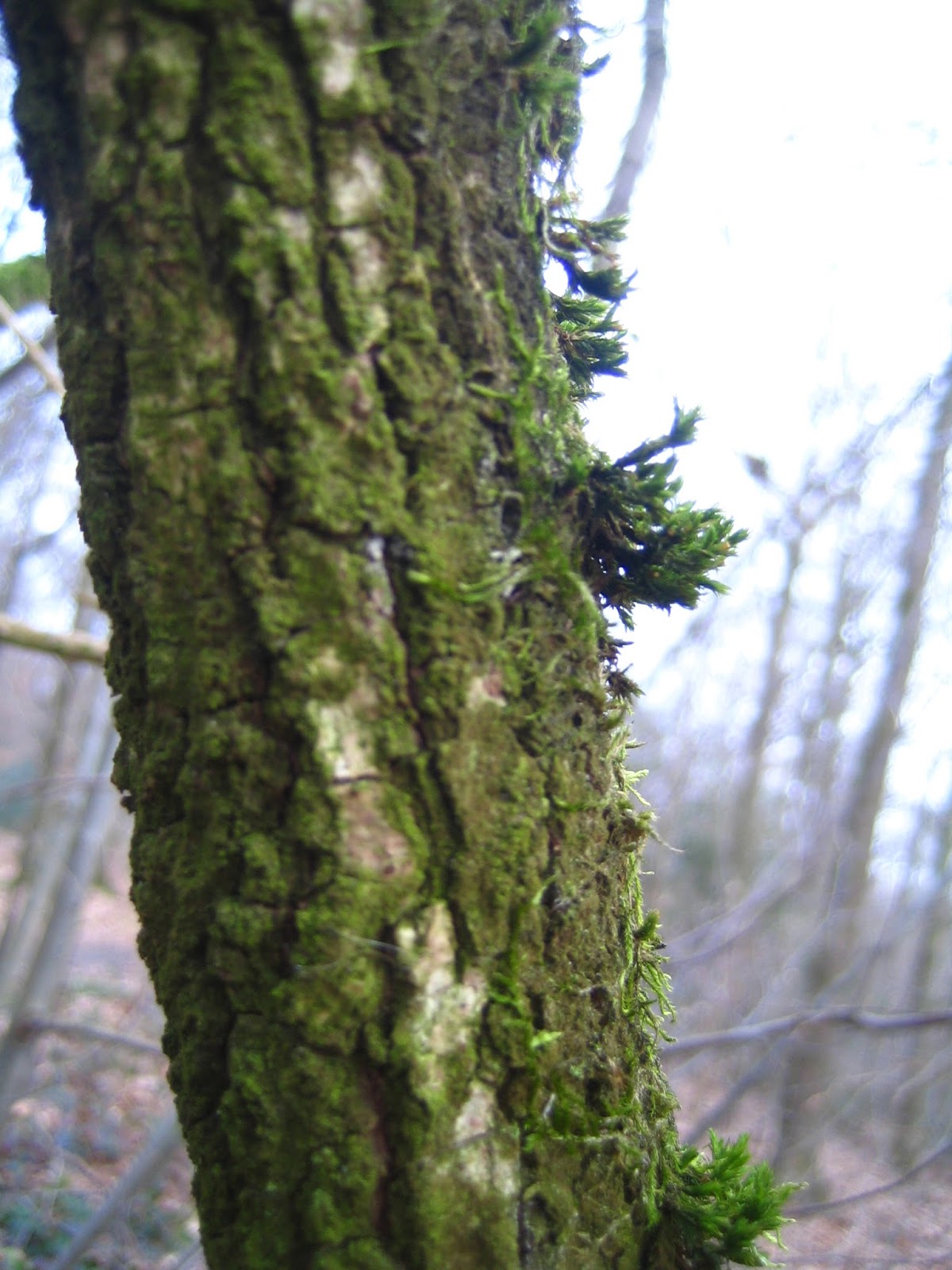
How, for instance, does a tree grow out of dendrites and spirals and root and stem and crown? What do the structures in the bark tell us? No, I do not think, there is only one "plan" and the tree just follows through. The way it grows is fractal. Say, the seed is resting in the earth and "wants" to grow out of the ground. Now postulate there are several universes and in each one of them there is a tiny detail that is different. Let us just look at two of them: In one plot the sapling simply grows straight out of the ground, so it becomes straight as an arrow. In the other a heavy branch had fallen from the crown over the sapling. Now there are several more plots. One possibility is that the seed dies and the sapling never grows. Another is that it has to grow around the branch... and a lot more I cannot think of now, and each and every one opens up new possibilities. The tree follows through a course of circumstances. These circumstances are not arbitrary in themselves, but fractal. Each fractal complex is interconnected with the other. The whole unit is so complex that I can safely argue that it is not to be described.


And look at this: This is not a renaissance ornament. It is a pine cone. Above you can watch an inspiring video by video artist Vi Hart with a bit of humour ;-).
Turn the pine cone, and there are the scales formed by a golden ratio spiral in the third dimension.

This is what we tend to forget: That even two - dimensional diagrams and concepts can be three- or four - dimensional. When we watch Vi Hart drawing lines on paper, two-dimensional gets a third dimension that is essentially the fourth: Time.

In a time lapse of a fern we see it grow. And trees grow. They grow year rings, but what we see...
Are scales on the bark, and similar patterns.
It grows in dendrites, and the stem is forked...
And when we look at it, we have to keep in heart that it grows at this very moment.
 
If you look at a screw from above, you´ll see a spiral...


Snow crystals grow in dendrites... but essentially they are water.

There are patterns that repeat themselves...
Rhythms...
...
...
...


I am not a mathematician. I can barely understand the Mandelbrot set. I am a writer, a poet maybe. But to understand the beauty of these dynamics, I need not know. I just have to see.


And there is so much to see. Spirals from spirals stem to dendrites and spirals... winter from summer, and summer from winter. Oh, true, also the life of my old mother which is currently in danger. But my mother is not just what she is now, but she is everything she always was and will be. Her life is something that I cannot fathom, as I cannot fathom mine. I´d wish she would get well again, of course, but I have to remind myself that she is more than just the momentary person, but a dynamic process embedded into a complex pattern. She IS the complex pattern, and will be and was, for, if you look at a screw from above, it is a spiral. If you look at a life from outside, there is no time dimension, or more than time, so to say. Words (or even maths) are not made to describe this. But one can feel it. One can feel the spirals turning and swirling. How can that be?


Now on another occasion I have stated that I have the strong suspicion that there is a connexion between the whiplash line and a dynamic yin yang in satori, flow or eucharist: http://fimbulmyrk.blogspot.de/2013/06/the-whiplash-line-what-mountainbike.html

This connexion is an interspersion of fractal systems. Let´s talk flow for starters. Say, a climber or mountainbiker experiences flow in a natural environment... The experience is called "autotelic" in sports psychology. This means that, since Hogrebe (1995: Metaphysik und Mantik)  along the lines of Hegelian dialectic, stated that semantic orientation in the human mind is vectorial, "telic" (the term deriving from Greek: telos: missile, javelin, arrow), the semantic experience of flow is returning onto itself and similar to itself, like the Mandelbrot set is. This is a feature of fractal logic. So, one can assume that flow a priori is fractal. Flow takes place in natural environments (Williams / Harvey 2001: http://www.sciencedirect.com/science/article/pii/S027249440190204X) and is triggered by e.g. forest environments.

Now that mountainbike rider rides through a trail in the woods where he experiences flow. And, to my personal experience, flow occurs often when there are a lot of dynamics shifts of weight and balance involved and at roundabout 80% of your own capability. Now many efficient moves in mountainbiking (bunny hop, manual, wheelie, even pedal strokes) follow circular and golden ratio spiral patterns (especially the bunny hop):

Look closely at the motion of the handlebar when the rider pulls at it.

Now this is not just about riding bikes and certainly no tutorial. If you feel so inclined, feel free to practice your hopping skills no less, but even in the intro of the vid you can see when you look at the movements of the bikes and riders through the berms, that their movements are smoothly and dynamically following circular or spiralling patterns. The system of all their movements during their descent is "constructed" fractal. And, according to my experience, it is trails like that in the video that are inclined to induce flow. Now add to all this that it takes place in a forest, on a trail that is subject to constant dynamic changes, that are self-similar in themselves, and the feeling of flow is par definitionem self-similar and self-directed.

Now flow would be just a psychological feature of some superficial members of the leisure society doing some fun sport, were it not described in books and stories far older than even the bicycle, let alone the mountainbike scene. From epiphany, hierophany, bodhodaya, satori, the descriptions of this dynamic psychological status are legion and congruent. It is in epiphany (according to Christian belief) alone that one can agnize that Christ is the son of God. It is called bodhodaya, when Arjuna in Hindu myth agnizes that his charioteer Krishna indeed is the incarnation of God (Bhagavadgita), and only in this state of mind he is able to do so. Flow therefore might be the state of mind to dissolve the conflict between the tininess of our agnition capacity and the fractal vastness of the universe. It´s so simple it would be a laughing matter. Of course I would like to continue on this topic...

...but in the meantime...

...I think...

...I´ll just have a cuppa forest.


Mittwoch, 1. Februar 2017

On the bench-bushcraft knife from magical sorcery crucible steel

 I just finished the etch and polish on the bushcraft knife that will be my very own, and... tadaah, Chrismas;-)...this came out:
The blade shows a very fine structure similar to Wootz patterns. Not only does it contain tungsten or stuff (spark analysis), but it also shows these beautiful curling patterns I like so much...

Messed up the original scales, so I think it will get some elk or stag antler scales, maybe with red G-10 liners.

Blade is 115x4mm with a high convex bevel and a tapered tang with filework. Balance point with scale will hopefully end up on the index finger.

I´ll keep you posted....

Dienstag, 20. September 2016

Semi-integral Jagdnicker (German hunting knife)

 Another bar of steel I found in the woods, a piece of roe deer antler I found in the woods... a knife...
 The steel shows a subtle pattern even after initial etching without a polish. The blade  is selectively tempered with a high convex bevel, 120x 3mm.

The integral is forged 100% with no filing just to show I can ;-).

Yap, I like it. It´s mine... ;-)

Beliebte Posts